Common Health Myths You Should Stop Believing
In today’s world, we’re surrounded by endless information about health and wellness. Social media, friends, and even family members often share “health tips” that sound convincing — but not all of them are true. Some of these ideas have been passed down for generations, while others have spread through viral posts. The problem? Believing these myths can actually harm your health rather than help it.
Let’s explore the most common health myths you should stop believing — and what science really says about them.
1. Myth: You Need to Drink 8 Glasses of Water a Day
Truth: While staying hydrated is essential, the “8 glasses a day” rule isn’t a one-size-fits-all solution. The right amount of water depends on your body size, activity level, climate, and diet.
If you eat lots of fruits, vegetables, and soups, you’re already getting water from your food. A better guideline is to drink when you feel thirsty and check your urine color — pale yellow usually means you’re well-hydrated.
Pro Tip: Athletes, pregnant women, and people in hot environments need more water than average.
2. Myth: Eating Fat Makes You Fat
Truth: Not all fats are bad. In fact, healthy fats — like those found in avocados, nuts, olive oil, and fish — are essential for brain function, hormone production, and heart health.
The real culprits behind weight gain are excess calories, sugary foods, and trans fats.
Good fats can even help you feel full longer, preventing overeating.
Pro Tip: Focus on unsaturated fats and limit trans and saturated fats.
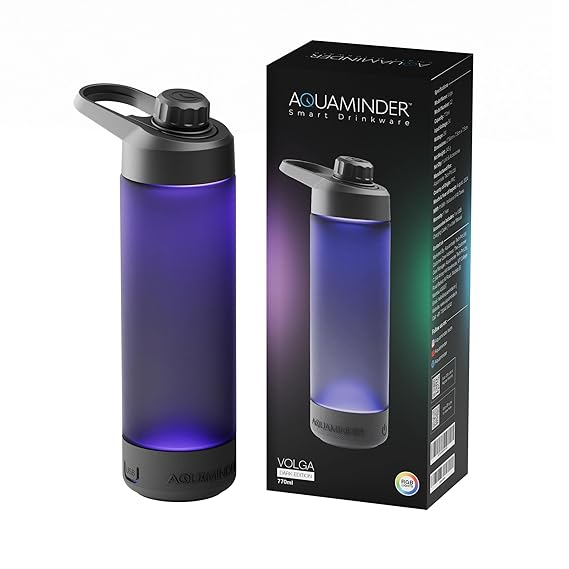
The Aquaminder Smart Water Bottle tracks your water intake and reminds you when to drink — no more guessing if you’ve had “8 glasses a day.
3. Myth: Detox Diets and Cleanses Remove Toxins from Your Body
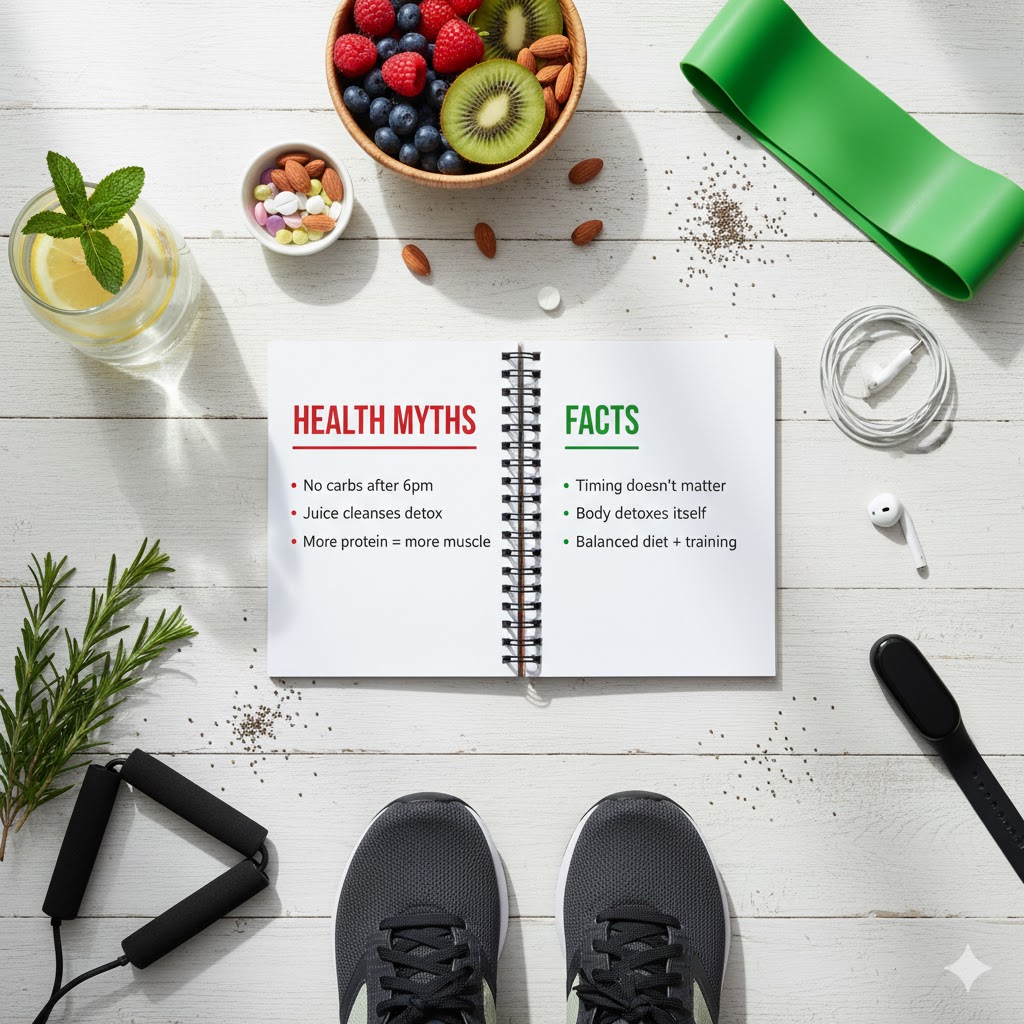
Truth: Your body already has a built-in detox system — your liver, kidneys, and lungs do an excellent job of removing waste.
Juice cleanses or detox teas may give you a temporary feeling of “lightness,” but they don’t actually remove toxins. In fact, some detox diets can deprive your body of essential nutrients.
Pro Tip: Support your body’s natural detox process by eating whole foods, staying hydrated, sleeping well, and limiting alcohol.
4. Myth: Late-Night Eating Causes Weight Gain
Truth: It’s not about when you eat — it’s about what and how much you eat.
Eating a small, balanced snack at night (like yogurt, nuts, or fruit) won’t make you gain weight. The problem arises when people overeat calorie-dense, processed snacks late at night while watching TV.
Pro Tip: Focus on total daily calorie intake, and try to finish heavy meals at least 2–3 hours before bed.
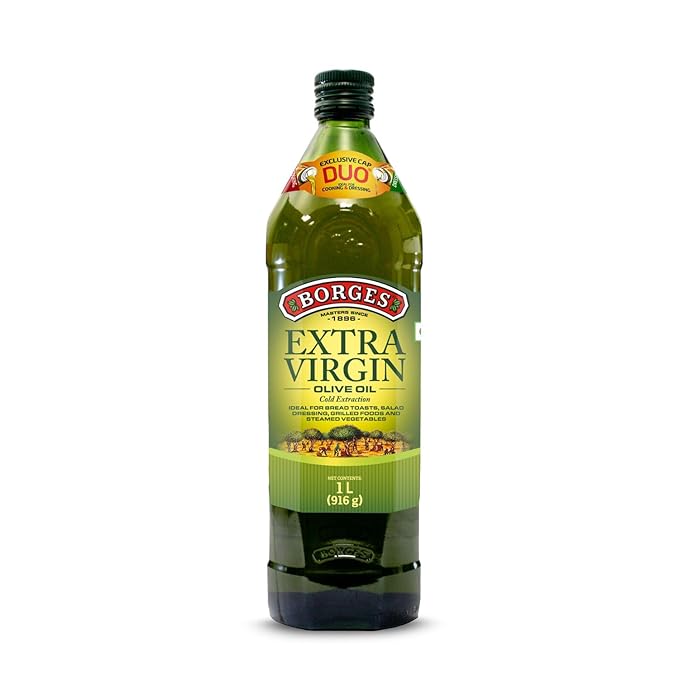
Try Borges Extra Virgin Olive Oil — a natural source of heart-healthy fats that supports brain and hormone function
5. Myth: You Must Take Vitamins Every Day
Truth: While vitamins are vital for health, most people get enough nutrients from a balanced diet. Overusing supplements can lead to side effects — for example, too much vitamin A can harm your liver.
However, some people (like pregnant women, vegans, or older adults) may need supplements based on medical advice.
Pro Tip: Always consult a doctor before starting any vitamin or mineral supplement.

6. Myth: Carbs Are Bad for You
Truth: Carbohydrates are the body’s main source of energy. The issue isn’t carbs themselves, but the type of carbs you consume.
Refined carbs like white bread and sugary snacks spike your blood sugar, but complex carbs — such as whole grains, fruits, and legumes — are packed with fiber and nutrients.
Pro Tip: Don’t fear carbs — choose whole and minimally processed options.
7. Myth: You Can Catch a Cold from Cold Weather
Truth: You catch a cold from viruses, not from being cold. However, cold weather can weaken your immune response or make you stay indoors where viruses spread more easily.
So, while chilly air doesn’t cause colds, it can indirectly make infections more likely.
Pro Tip: Wash your hands regularly, stay warm, and maintain a strong immune system.
8. Myth: Skipping Meals Helps You Lose Weight
Truth: Skipping meals often backfires. When you go too long without food, your metabolism slows down and your hunger hormones spike — leading to overeating later.
A better approach is to eat smaller, balanced meals throughout the day to keep your energy and metabolism steady.
Pro Tip: Try mindful eating instead of meal skipping. It’s more sustainable for weight management.
9. Myth: You Only Need Sunscreen on Sunny Days
Truth: UV rays can damage your skin even when it’s cloudy or cold. Up to 80% of UV rays can pass through clouds.
Daily sunscreen use helps prevent premature aging, sunburns, and even skin cancer — regardless of the season.
Pro Tip: Use a broad-spectrum sunscreen (SPF 30 or higher) every day, even indoors if you sit near windows.
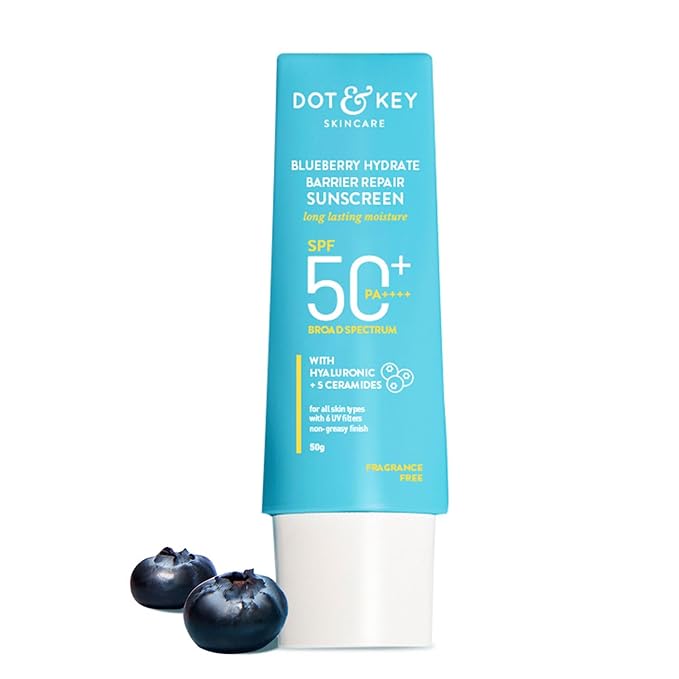
Keep your skin safe every day with Dot and Key Blueberry Hydrate— lightweight, non-greasy, and effective even on cloudy days.
10. Myth: Natural or Herbal Products Are Always Safe
Truth: “Natural” doesn’t always mean “safe.” Some herbal remedies can interfere with prescription drugs or cause allergic reactions.
For example, St. John’s Wort can reduce the effectiveness of birth control pills and certain antidepressants.
Pro Tip: Always check with your doctor or pharmacist before using herbal products or supplements.
11. Myth: You Need to Sweat to Have a Good Workout
Truth: Sweating isn’t a measure of workout effectiveness — it’s your body’s way of cooling down.
You can have a great workout (like yoga, Pilates, or strength training) without breaking a heavy sweat. What matters is consistent effort and form.
Pro Tip: Track your progress with performance improvements, not just sweat levels.
12. Myth: Cracking Your Knuckles Causes Arthritis
Truth: Cracking your knuckles may annoy people around you, but it doesn’t cause arthritis.
The popping sound comes from gas bubbles in your joint fluid. However, excessive cracking might lead to temporary swelling or reduced grip strength.
Pro Tip: Stretch your hands and fingers regularly to maintain joint flexibility.
Table: Common Health Myths vs. Scientific Facts
| Health Myth | What People Believe | Scientific Truth |
| Drink 8 glasses of water daily | Everyone needs exactly 8 glasses | Hydration needs vary by person and activity |
| Eating fat makes you fat | All fats cause weight gain | Healthy fats are essential for body function |
| Detox diets remove toxins | Teas or cleanses purify your system | Your liver and kidneys handle detox naturally |
| Late-night eating causes weight gain | Food after 8 PM makes you fat | Total calorie intake matters more |
| You must take vitamins daily | Supplements are always needed | A balanced diet usually provides enough nutrients |
| Carbs are bad | All carbs lead to weight gain | Complex carbs are healthy and provide energy |
| Cold weather causes colds | You get sick from being cold | Viruses cause colds, not temperature |
| Skipping meals helps lose weight | Fewer meals mean fewer calories | Skipping meals slows metabolism |
| Sunscreen only on sunny days | Clouds block UV rays | UV rays penetrate clouds and windows |
| Natural products are always safe | Herbal means harmless | Some herbs interact with medications |
| You need to sweat to exercise well | Sweating equals calorie burn | Effectiveness depends on effort, not sweat |
| Cracking knuckles causes arthritis | Knuckle cracking damages joints | No link to arthritis proven |

Health myths can be hard to spot — especially when they sound logical or come from people we trust. But following false health advice can lead to poor habits, wasted money, or even harm.
The best way to stay healthy is to rely on credible sources, consult medical professionals, and make evidence-based choices.
Remember: true wellness isn’t about trendy diets or overnight fixes — it’s about balance, awareness, and consistency.
So the next time you hear a “too good to be true” health tip, pause and ask — is it fact, or just another myth?